Category: Uncategorized

  • GOD Never Dwells Where Hate Exists

    Introduction

    The world today is filled with division, anger, resentment, and hatred. Families are torn apart by unresolved conflicts, friendships are broken by misunderstandings, and communities are often divided by prejudice and pride. While these negative emotions may seem common, Scripture teaches us a powerful truth: God does not dwell where hate exists.

    God is love. His nature, character, and actions are rooted in love. Wherever His presence is welcomed, love flourishes, forgiveness grows, and peace reigns. However, when hatred is allowed to take root in our hearts, it creates a barrier that separates us from experiencing the fullness of God’s presence.

    This does not mean that God abandons people who struggle with anger or resentment. Rather, it means that hatred is contrary to His nature and prevents us from enjoying a close relationship with Him. To walk with God, we must learn to replace hatred with love, bitterness with forgiveness, and division with reconciliation.

    God’s Nature Is Love

    One of the most beautiful descriptions of God is found in the Bible:

    “Whoever does not love does not know God, because God is love.” (1 John 4:8)

    Notice that Scripture does not merely say God is loving. It says God is love. Love is not simply something God does; it is who He is.

    Everything God does flows from His love. He created humanity because of love. He sent His Son Jesus Christ because of love. He forgives sinners because of love. He offers eternal life because of love.

    Because God’s very nature is love, hatred cannot coexist with His perfect character. When we harbor hatred in our hearts, we are embracing something that is opposite to the nature of God.

    The Destructive Power of Hate

    Hatred is one of the most destructive forces in human life. It begins as a small seed of offense but can quickly grow into bitterness, resentment, revenge, and even cruelty.

    Hatred destroys relationships. It blinds people to the good in others. It creates walls where bridges should exist.

    Many people believe hatred only harms the person they dislike. In reality, hatred often damages the person carrying it even more.

    When someone holds hatred in their heart:

    • Their peace disappears.
    • Their joy diminishes.
    • Their spiritual growth slows.
    • Their relationship with God suffers.
    • Their ability to love others becomes weakened.

    Hatred acts like poison. The person carrying it often suffers long before the intended target feels any effect.

    God desires freedom for His children, and freedom begins when hatred is released.

    Jesus Taught Radical Love

    Jesus introduced a revolutionary standard of love.

    He said:

    “Love your enemies and pray for those who persecute you.” (Matthew 5:44)

    This command challenges human nature. Loving friends is easy. Loving those who hurt us is difficult.

    Yet Jesus understood that hatred traps people in spiritual bondage. Love, on the other hand, brings healing and freedom.

    When Jesus was nailed to the cross, He demonstrated the greatest example of love ever recorded. Instead of cursing His executioners, He prayed:

    “Father, forgive them, for they do not know what they are doing.” (Luke 23:34)

    In His darkest moment, Jesus chose forgiveness instead of hatred.

    If the Savior of the world could forgive those who crucified Him, then through His grace we can learn to forgive those who have wounded us.

    Hate Creates Distance Between Us and God

    Sin in general separates humanity from God, but hatred has a unique impact because it directly contradicts His command to love.

    The Apostle John wrote:

    “Anyone who claims to be in the light but hates a brother or sister is still in the darkness.” (1 John 2:9)

    These words are powerful. A person may attend church, read the Bible, and participate in religious activities, yet still struggle spiritually because hatred remains hidden in the heart.

    God desires genuine transformation, not merely outward appearances.

    The closer we grow to God, the more He teaches us to love others—even those who are difficult to love.

    Forgiveness Opens the Door to God’s Presence

    Forgiveness is one of the most powerful spiritual decisions a person can make.

    Forgiveness does not mean pretending that wrong actions never happened. It does not excuse injustice or deny pain.

    Instead, forgiveness means releasing the desire for revenge and placing the situation into God’s hands.

    When we forgive:

    • We free ourselves from bitterness.
    • We allow God to heal emotional wounds.
    • We experience greater peace.
    • We make room for God’s presence to work within us.

    Many people pray for God’s peace while still holding resentment against someone. Yet peace often begins when forgiveness is chosen.

    God’s presence flourishes in hearts that are willing to forgive.

    Love Invites God’s Presence

    Throughout Scripture, love is repeatedly connected to God’s presence.

    When families love one another, homes become places of peace.

    When churches love one another, they become powerful witnesses to the world.

    When communities practice love, healing and unity become possible.

    Love creates an environment where God’s Spirit can work freely.

    This is why Jesus said:

    “By this everyone will know that you are my disciples, if you love one another.” (John 13:35)

    Love is the identifying mark of a true follower of Christ.

    People may not remember every sermon we preach, but they will remember how we treated them.

    Practical Ways to Remove Hate from Your Heart

    If you recognize hatred, bitterness, or resentment within yourself, don’t lose hope. God specializes in transforming hearts.

    Here are practical steps:

    1. Pray Honestly

    Tell God exactly how you feel. He already knows your pain.

    2. Ask God to Help You Forgive

    Forgiveness is often a process rather than a single event.

    3. Pray for the Person Who Hurt You

    This may feel difficult, but it softens the heart and invites God’s healing.

    4. Focus on God’s Love

    Spend time reading Scripture and reflecting on God’s mercy toward you.

    5. Practice Kindness

    Small acts of kindness can gradually replace negative emotions with compassion.

    The Blessing of Choosing Love

    When believers choose love over hatred, remarkable things happen.

    Relationships are restored.

    Families are healed.

    Communities become stronger.

    Churches become united.

    Most importantly, hearts become open to the transforming presence of God.

    Love does not always change circumstances immediately, but it changes people. It changes perspectives. It changes attitudes. It changes lives.

    Conclusion

    God never dwells where hate exists because hatred opposes His very nature. God is love, and wherever His presence is welcomed, love grows, forgiveness flourishes, and peace prevails.

    Each day we face a choice. We can hold on to resentment and bitterness, or we can embrace the love that God offers through Jesus Christ.

    Choosing love does not mean weakness. It means strength. It means trusting God with our hurts and allowing Him to heal what hatred can never fix.

    Today, examine your heart. If there is anger, bitterness, or hatred hidden within, surrender it to God. Ask Him to replace it with His love.

    For where love reigns, God is present. And where God is present, lives are transformed forever.

    ” Bear patiently, my heart – for you have suffered heavier things.”

    “Homer”

    Leave a Reply

    Your email address will not be published. Required fields are marked *

  • My Story: Steered by Faith, Anchored by Grace


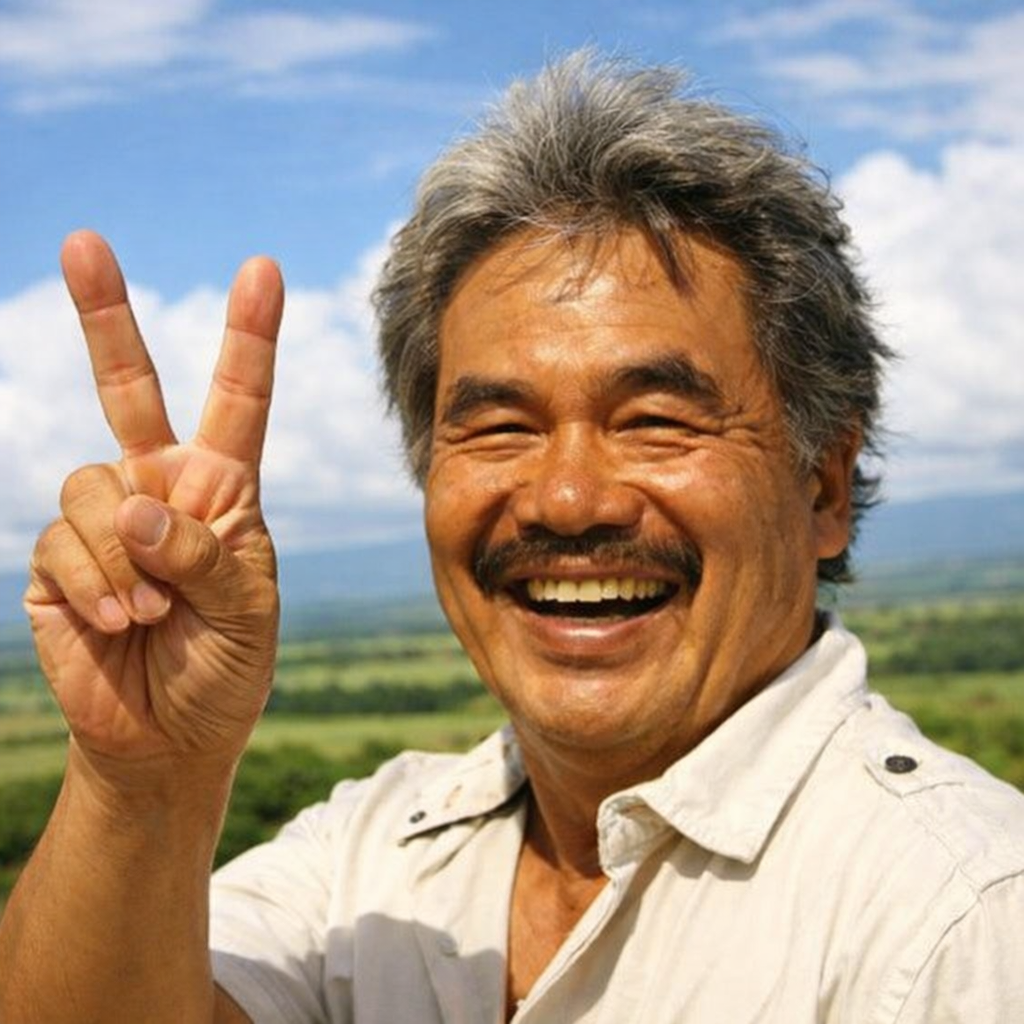
    I was born on February 5, 1955, in Tagbilaran, Bohol—a quiet place where faith was not just taught, but lived. My parents were devoted Catholics, and from them I learned early that life is a gift from God, meant to be cherished, worked on, and offered back to Him with gratitude. Our home was simple, but it was rich in prayer, discipline, and love. Those early years planted seeds that would later sustain me through storms I never imagined.

    As a young man, I pursued a Bachelor of Science in Marine Transportation at PMI-Bohol and graduated in 1976. The sea called to me—not just as a profession, but as a proving ground. In 1979, after completing my apprenticeship, I began working on international ships. Life at sea taught me humility. It taught me patience. It taught me that no matter how skilled a man may be, he is still small before the vastness of God’s creation. Many nights, under foreign skies and unfamiliar stars, I prayed. I learned to trust God not only in calm waters, but especially in rough ones.

    When my years as a seafarer came to an end, I did not leave the sea behind completely. I became a Maritime Training instructor, passing on what I had learned—not just about navigation and safety, but about character, responsibility, and respect for life. Teaching reminded me that our true legacy is not what we earn, but what we give.

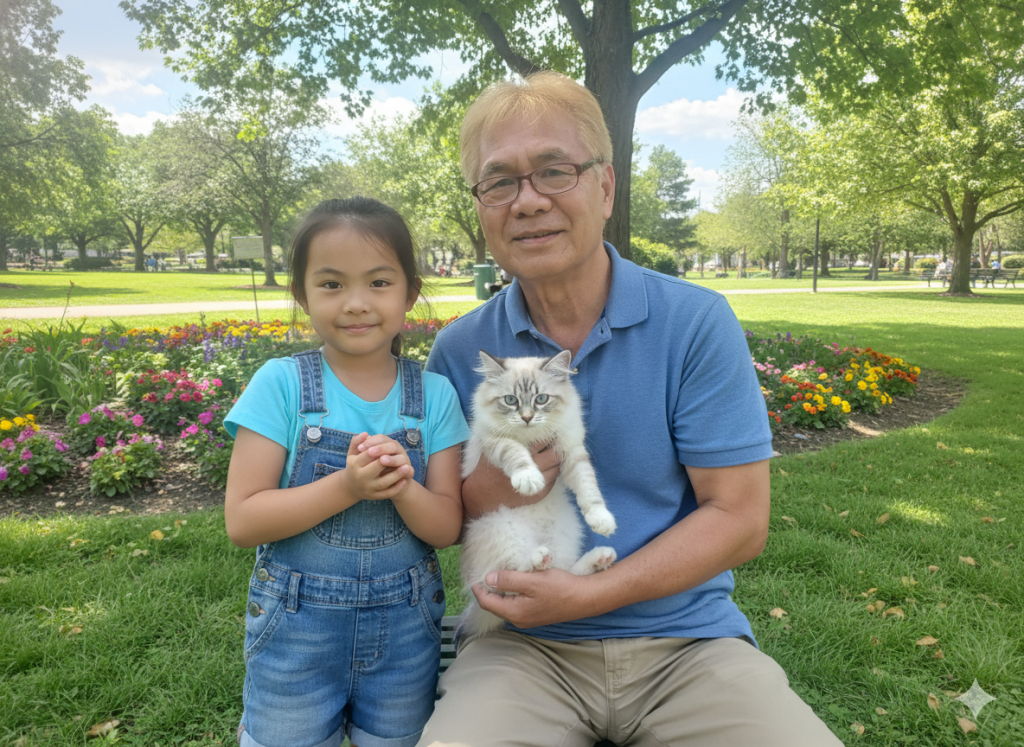
    In 2009, my life changed forever. I lost my wife and became a widower, left to raise our three children—one daughter and two sons. Grief is a heavy cross, and there were days when faith was not easy. But even then, God did not abandon me. He carried me through the pain, strengthened me in my weakness, and helped me raise my children, who are now adults. Today, I am blessed with five grandchildren—living reminders that life continues, love multiplies, and God’s promises endure.

    Just when I thought my story had settled into quiet chapters, God surprised me again. In 2019, I remarried. Love found me once more, not as a replacement for the past, but as a new beginning. Today, I am blessed with a 6-year-old daughter who fills our home with laughter and wonder, and a 25-year-old stepson who adds another layer to our family story. At an age when many slow down, God entrusted me with new responsibilities—and new joy.

    Now, at 71 years old, I look back with gratitude, not regret. My life has known calm seas and violent storms, deep loss and unexpected blessings. Through it all, one truth remains: God has been faithful. Every chapter—whether joyful or painful—had a purpose.

    If my story teaches anything, it is this: age is not a limitation, loss is not the end, and faith is never wasted. God is always at work, writing stories far greater than we can imagine. As long as we trust Him, even the broken pieces of our lives can become a testimony of hope, love, and grace.

    ” Beware of undertaking too much at the start. Be content with quite a little. Allow for accidents. Allow for human nature, especially your own.”

    Arnold Bennet

    Leave a Reply

    Your email address will not be published. Required fields are marked *

  • TRUTH Respects FREEDOM

    Truth is powerful—but it is never forceful.
    It does not shout to dominate, nor does it coerce to be believed. Truth stands quietly, confidently, waiting to be freely received. This is because truth respects freedom.

    From a spiritual perspective, this is one of the most beautiful realities of life. God, who is Truth itself, never violates the freedom He has given us. He invites, He calls, He knocks—but He never breaks the door. Love without freedom is control; faith without freedom is fear. That is why genuine truth always leaves room for choice.

    In our daily lives, we often feel the urge to convince, to argue, to impose what we know to be right. Yet real transformation never comes from pressure. It comes when a heart is ready, when a mind is open, when a soul freely says yes. Truth does not lose its power by waiting—it gains dignity.

    Freedom allows truth to be embraced, not endured.
    When we choose truth freely, it shapes our character, strengthens our faith, and deepens our peace. Obedience chosen in freedom becomes joy. Belief chosen in freedom becomes conviction. Love chosen in freedom becomes lasting.

    Jesus Himself showed us this path. He spoke the truth clearly, lived it perfectly, and yet allowed people to walk away. He respected freedom even when it meant rejection. In doing so, He taught us that truth does not need force to be real—it only needs to be faithful.

    This is also a lesson for how we live and relate with others. Let us speak truth with humility, share wisdom with patience, and trust that what is true will find its way into open hearts. Our role is not to control outcomes, but to witness with love.

    In a world that often confuses loudness with authority, remember this quiet strength:
    Truth never enslaves. It sets free—but only when freely chosen.

    May we always seek the truth, speak it with grace, and honor the sacred freedom through which it transforms lives.

    “All things come to he who waits…provided he knows what he’s waiting for.”

    Woodrow Wilson

    Leave a Reply

    Your email address will not be published. Required fields are marked *

  • Waves View Villa, Samal Island

    That overnight stay at **Waves View Penthouse** on Samal Island felt like one of those quiet gifts God slips into our lives when we’re not rushing, not striving—just present.

    As evening settled in, the sea stretched endlessly before us, waves rising and falling in steady rhythm, as if reminding our hearts how to breathe again. The penthouse stood high enough to give us perspective, yet close enough to hear the ocean whisper its ancient prayers. In that moment, it was clear: rest is not a luxury—it is a form of trust.

    The night carried a sacred stillness. Lights from distant shores shimmered like promises across the water, and the breeze moved gently, as though heaven itself was saying, *“Be still, and know that I am God.”* There were no loud demands, no deadlines calling our names—only gratitude filling the spaces where worry used to live.

    As dawn approached, Samal revealed another lesson. The sunrise did not hurry, yet it arrived right on time. Soft colors painted the sky, and hope rose with the light. It was a quiet reminder that God’s faithfulness works the same way—steady, sure, never late. Even after nights, joy comes in the morning.

    That overnight stay became more than a getaway. It was a pause. A reset. A holy moment of alignment—where the soul remembered what peace feels like, and the heart learned again to listen. Waves kept moving, just as life does, but for a while, we were allowed to rest in the truth that we are held by something greater.

    Leaving Waves View Penthouse, we carried more than memories. We carried renewed strength, deeper gratitude, and a gentle assurance: when we make space for rest, God fills it with clarity, peace, and quiet joy. 🌊✨

    A Wonderful Experience, a secluded place where you can relax leisurely away from the bustling city, Waves View Villa, Samal Island.

    Leave a Reply

    Your email address will not be published. Required fields are marked *

  • A Peace Loving Person

    A peace-loving person is someone who is deeply committed to promoting harmony, understanding, and nonviolence in all aspects of life. Such an individual prioritizes peaceful resolutions to conflicts and actively seeks to create a positive and tranquil environment.
    Here are some traits commonly associated with a peace-loving person:
    1. Non-violent Communication: A peace-loving person communicates in a way that is respectful, empathetic, and non-confrontational. They prioritize understanding over winning arguments and seek to find common ground.
    2. Empathy: They have a strong sense of empathy, putting themselves in others’ shoes to better understand their perspectives and feelings. This enables them to build bridges and foster understanding even in challenging situations.
    3. Tolerance: Peace-loving individuals are generally tolerant and accepting of diversity. They embrace different cultures, beliefs, and lifestyles, recognizing the value of diversity in creating a harmonious world.
    4. Conflict Resolution Skills: Instead of escalating conflicts, a peace-loving person actively works towards finding peaceful solutions. They are adept at mediation, negotiation, and compromise, seeking resolutions that benefit all parties involved.
    5. Promotion of Justice: While seeking peace, a peace-loving person is often committed to justice. They advocate for fairness, equality, and human rights, recognizing that true peace cannot be achieved without addressing underlying injustices.
    6. Mindfulness: Many peace-loving individuals practice mindfulness, staying present in the moment and cultivating a sense of inner calm. This mindfulness extends to their interactions with others, contributing to a more peaceful and positive atmosphere.
    7. Community Involvement: Peace-loving people often engage in community-building activities. They participate in initiatives that promote social cohesion, understanding, and cooperation among individuals and groups.
    8. Environmental Stewardship: Recognizing the interconnectedness of all living things, a peace-loving person may also demonstrate a commitment to environmental sustainability and conservation. They understand the importance of preserving the planet for future generations.
    9. Personal Integrity: Peace-loving individuals often exhibit personal integrity, living in alignment with their values. They strive to be honest, ethical, and accountable in their actions, contributing to an environment of trust and goodwill.
    In essence, a peace-loving person embodies a commitment to creating a world where understanding and cooperation prevail over conflict and hostility. Their actions and attitudes contribute to building a more harmonious and compassionate society.

    Leave a Reply

    Your email address will not be published. Required fields are marked *

  • True Faith Can Soften the Heart

    There is a quiet strength in true faith. It does not shout, force, or demand. Instead, it works gently—like rain on dry ground—softening what has become hard, tenderizing what has been wounded, and awakening what once felt numb.

    Life has a way of hardening the heart. Disappointments pile up. Betrayals leave scars. Prayers seem unanswered. Over time, we build walls—not because we are cruel, but because we are tired. We learn to protect ourselves. We learn to close off. And without realizing it, the heart that once trusted freely becomes guarded and heavy.

    This is where true faith enters—not as a rulebook, but as a healing presence.

    True faith teaches us to trust again, not in our own strength, but in God’s faithfulness. It reminds us that even when people fail us, God remains constant. Faith does not deny pain; it carries pain into God’s hands. And in that surrender, something remarkable happens—the tight grip of bitterness loosens, and the heart begins to breathe again.

    A softened heart is not a weak heart. It is a brave one. It takes courage to forgive when wounds are still fresh. It takes faith to remain kind in a world that often rewards hardness. True faith reshapes our inner posture, turning clenched fists into open palms. It allows compassion to flow where resentment once lived.

    When faith is real, it humbles us. We realize we are not self-made, not self-sustaining. We become more patient with others because we recognize how patient God has been with us. We listen more. We judge less. We love deeper. Faith gently removes the rough edges of pride and replaces them with understanding.

    Scripture captures this transformation beautifully:

    “I will give you a new heart and put a new spirit within you; I will remove from you your heart of stone and give you a heart of flesh.” (Ezekiel 36:26)

    A heart of flesh feels. It hopes. It believes again. It weeps, but it also rejoices. True faith does not make us immune to suffering—it makes us responsive to grace. It teaches us that softness is not surrender to the world, but surrender to God.

    In a time when being hard seems necessary for survival, true faith invites us to be tender instead. And in that tenderness, we discover strength—the kind that heals, restores, and reflects the very heart of God.

    May your faith continue to soften you—not into fear, but into love; not into passivity, but into compassion; not into fragility, but into a quiet, unshakable trust that God is still at work within you.

    “Faith is choosing to trust God’s light even when the road is dark, believing that every step you take in hope is already a step toward His promise.” ✨

    No comments on True Faith Can Soften the Heart

    Leave a Reply

    Your email address will not be published. Required fields are marked *

  • Repentance Is a Doorway

    Repentance is often misunderstood as a place of shame, but in truth, it is a doorway—wide open, filled with light, and marked by grace. It is not the end of the road; it is the beginning of a better one. When God invites us to repent, He is not pushing us away—He is calling us closer.
    A doorway exists for one purpose: to lead us from where we are into somewhere new. Repentance works the same way. It gently asks us to pause, to turn, and to step forward with honesty. It does not deny our past, but it refuses to let our past define our future. Through repentance, the once heavy heart begins to breathe again.
    True repentance is not about fear of punishment; it is about the courage to change. It is the moment we lay down our pride and admit our need for God. In that surrender, something powerful happens: the hard heart softens, the wounded spirit finds healing, and the weary soul discovers rest. What once felt like failure becomes fertile ground for transformation.
    God does not stand on the other side of the doorway with crossed arms. He stands there with open hands. Repentance is met not with condemnation, but with mercy. Scripture reminds us that God delights in restoring what was broken. When we turn toward Him, He runs toward us, ready to forgive, renew, and rebuild.
    Walking through the doorway of repentance changes how we see ourselves and others. We become more patient, more compassionate, more aware of grace—because we have tasted it ourselves. Repentance teaches us humility, and humility opens the heart to wisdom. It teaches us that growth is possible, no matter how far we have wandered.
    Every day, God places this doorway before us. It is not locked. It does not require perfection. It only asks for sincerity. One step of repentance can lead to freedom, peace, and a deeper relationship with God.
    So if your heart feels burdened, do not be afraid. Repentance is not a wall—it is a doorway. And on the other side is grace, restoration, and a new beginning waiting for you.

    Welcome to my website, which is full of inspiring, motivational, encouraging, and spiritual blogs for the betterment of humanity.

    Leave a Reply

    Your email address will not be published. Required fields are marked *

  • Understanding the Prostate Gland: Anatomy, Function, and Contemporary Research

    The prostate gland is a small yet pivotal component of the male reproductive system. Despite its modest size—about that of a walnut—it plays an essential role in fertility and male health throughout life. This review draws on current anatomical and physiological knowledge, supported by medical research, to provide a comprehensive understanding of this organ.

    Anatomy and Structural Overview

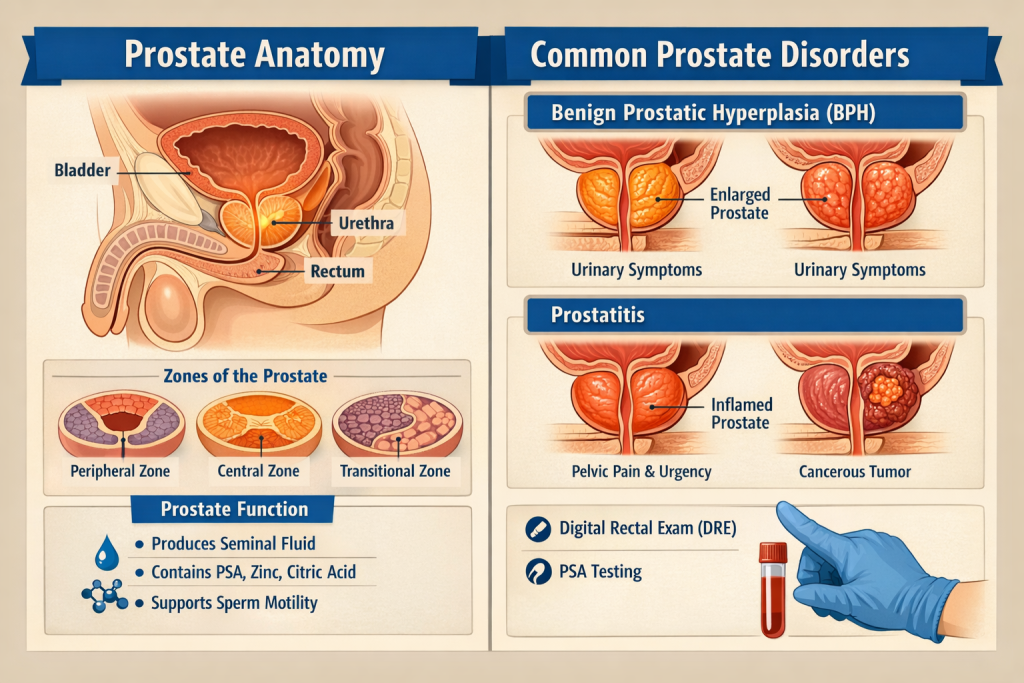
    The prostate is situated just below the urinary bladder and in front of the rectum, encircling the urethra—the tube responsible for carrying urine and semen out of the body. Its position means changes in prostate size or texture can impact urination and reproductive function.

    Anatomically, the gland is composed of both glandular tissue, which produces secretions, and fibromuscular stroma, which supports structural integrity and function. The prostate is classically divided into regions known as zones—peripheral, central, and transitional—each with distinct clinical relevance (e.g., cancer frequently arises in the peripheral zone).

    At the microscopic level, the prostate’s secretory units are tubuloalveolar glands, richly supplied with blood and surrounded by smooth muscle fibers. These muscles are critical for propelling prostatic fluid into the urethra during ejaculation.

    Physiology: What the Prostate Does

    The primary role of the prostate is to produce and secrete a significant portion of the fluid found in semen. This prostatic fluid is slightly alkaline and contains enzymes like prostate-specific antigen (PSA), fibrinolysin, citric acid, and various ions such as zinc, all of which contribute to sperm viability and mobility. The alkalinity helps counteract the acidic environment of the female reproductive tract, enhancing sperm survival after ejaculation.

    In addition to fluid production, the prostate contributes to:

    Sperm activation: Prostatic secretions help spermatozoa gain motility.

    Ejaculation mechanics: Smooth muscles in the prostate contract rhythmically during climax, aiding semen expulsion.

    Hormonal interactions: Androgens, especially testosterone and its more active derivative dihydrotestosterone (DHT), are critical for prostate development and secretory function.

    Clinical Importance and Common Conditions

    Because of its anatomical location, the prostate is implicated in several common health conditions:

    1. Benign Prostatic Hyperplasia (BPH)

    As men age, the prostate often enlarges, particularly within the transitional zone. This enlargement can compress the urethra, leading to urinary difficulties such as a weak stream, urgency, and incomplete bladder emptying. BPH is not cancer, but it can significantly impact quality of life.

    2. Prostatitis

    Inflammation of the prostate—often from bacterial infection or chronic inflammation—can result in pain, urinary symptoms, and discomfort during ejaculation. This condition can affect men of all ages, though it is especially common in younger and middle-aged adults.

    3. Prostate Cancer

    Prostate cancer is one of the most commonly diagnosed cancers in men globally and a major cause of cancer-related death. Tumors typically originate in the peripheral zone and may be detected via elevated PSA levels or digital rectal examination (DRE), with imaging and biopsy confirming the diagnosis.

    Current research continues to refine our understanding of prostate cancer biology. For example, scientists have identified proteins such as TBX-2 and LSD-1 that may contribute to drug resistance in aggressive prostate cancer forms, suggesting potential new therapeutic targets.

    Innovations in diagnostics are also emerging. Novel rapid blood tests using advanced imaging of dried blood smears have shown promise for early cancer detection, potentially enhancing screening accuracy beyond traditional PSA measurements.

    Hormonal Regulation and Development

    The prostate’s growth and function are intricately controlled by steroid hormones. Androgens such as testosterone and DHT are essential for prostate cell differentiation, growth, and secretory activity. Researchers emphasize the importance of cell-cell communication and androgen signaling in maintaining both normal prostate physiology and in the progression of pathological states.

    Conclusion

    The prostate gland, though small, is a complex and vital organ with roles that extend far beyond fluid production. Its intricate anatomy and physiology are foundational to male reproductive health. As research advances—from molecular studies of hormone regulation to groundbreaking diagnostic tools—our understanding of prostate function and disease continues to evolve, offering hope for improved prevention, diagnosis, and treatment of prostate conditions.

    Disclosure: This post may contain affiliate links. If you choose to purchase through them, I may earn a commission at no additional cost to you.

    👉 Recommended Resource:

    Leave a Reply

    Your email address will not be published. Required fields are marked *

  • Starting an Online Business with Purpose (Not Pressure)

    African American woman counting money in living room

    Starting an online business can feel overwhelming. There are countless promises, loud voices, and “get-rich-quick” claims that leave many people confused—or discouraged.

    I’ve learned that building something meaningful takes more than speed. It brings clarity, patience, and the right guidance.

    At Project Lovely, I believe business should be rooted in purpose. Growth is important, yes—but so is integrity. Not every opportunity is worth chasing, and not every tool is right for every person.

    For those who are beginning their online journey and looking for a structured way to understand how online business works, there are learning resources that focus on foundations rather than shortcuts. Programs that teach mindset, systems, and consistency tend to be more helpful than those that promise instant success.

    One resource I’ve personally explored is designed to help beginners understand the basics of online income, step by step. It emphasizes learning before earning, which aligns with my belief that good work takes time.

    👉 Recommended Resource:


    Disclosure: This post may contain affiliate links. If you choose to purchase through them, I may earn a commission at no additional cost to you.

    Leave a Reply

    Your email address will not be published. Required fields are marked *

  • Forgiveness: A Sure Road to Peace Within Our Hearts

    Forgiveness is one of the most powerful gifts we can offer ourselves. It is not a sign of weakness, nor is it forgetting the hurt we have experienced. Instead, forgiveness is a courageous decision to set our hearts free from the weight that keeps us from moving forward. When we choose to forgive, we choose peace.
    Many times, the pain caused by others becomes a silent burden we carry every day. It affects our thoughts, our emotions, and even our dreams for the future. But the moment we decide to loosen our grip on anger and release the hurt, something beautiful begins to happen: our hearts become lighter, our minds clearer, and our spirits stronger.
    Forgiveness does not mean we approve of what happened—it simply means we are no longer willing to let the past control our present. It is choosing healing over bitterness, hope over resentment, and freedom over emotional chains. And the more we forgive, the more room we create for love, joy, and peace to enter our lives.
    True peace begins in the heart. When we let go of grudges, we open ourselves to God’s grace and allow His love to restore what was broken. Forgiveness becomes a pathway—one that leads not only to inner calm but also to a deeper connection with the people around us.
    Walk this road today. Let forgiveness be your quiet strength. Allow it to heal the wounds that once stole your joy. And as you forgive, may you discover the gentle peace that has always been waiting within your heart.

    Leave a Reply

    Your email address will not be published. Required fields are marked *