Category: spiritual growth

  • Trusting God When Life Is Hard

    Meta Description: Trusting God in Hard Times: Bible Verses for Strength and Hope
    Discover encouragement and strength in life’s hardest seasons with this inspiring devotional on trusting God. Filled with Bible verses, practical steps, and reflections, it reminds us of God’s presence in the storm and His promises that never fail.

    Life is full of mountaintop moments—times of joy, clarity, and peace. But it is also filled with valleys—times of pain, confusion, and hardship. In those valleys, trusting God can feel like the hardest thing to do. Yet it is precisely in those moments that faith becomes most powerful. The Bible reminds us that God is not distant in our suffering; He is near, and He calls us to lean on Him.


    1. The Reality of Hardship

    Hardship is not an anomaly in the Christian life—it is part of the journey. Jesus Himself prepared His disciples for this truth: “In this world you will have trouble. But take heart! I have overcome the world” (John 16:33). Trials are not evidence of God’s abandonment; they are opportunities to experience His sustaining grace.

    Consider Job, who lost everything yet declared, “Though He slay me, yet will I hope in Him” (Job 13:15). His story reminds us that faith is not built on circumstances but on the unchanging character of God.


    2. God’s Presence in the Storm

    When life feels overwhelming, the greatest comfort is knowing that God is with us. Scripture repeatedly assures us of His presence:

    • “Be strong and courageous. Do not be afraid… for the Lord your God goes with you; He will never leave you nor forsake you” (Deuteronomy 31:6).
    • “The Lord is close to the brokenhearted and saves those who are crushed in spirit” (Psalm 34:18).
    • “So do not fear, for I am with you… I will strengthen you and help you” (Isaiah 41:10).

    These verses remind us that God is not a distant observer. He walks with us through the fire, just as He did with Shadrach, Meshach, and Abednego in the furnace (Daniel 3). His presence transforms fear into courage.


    3. Faith as Surrender

    Trusting God is not about controlling outcomes—it is about surrendering them. Proverbs 3:5-6 teaches: “Trust in the Lord with all your heart and lean not on your own understanding; in all your ways submit to Him, and He will make your paths straight.”

    Faith is not passive resignation; it is active reliance. It means saying, “God, I don’t understand, but I trust You.” It is choosing to believe that His wisdom is greater than ours, even when His plan is hidden.

    Abraham modeled this surrender when he obeyed God’s call to leave his homeland without knowing where he was going (Hebrews 11:8). His trust was not in a map but in the One who guided him.


    4. God’s Promises Never Fail

    In seasons of hardship, God’s promises are anchors for the soul. They remind us that His character is faithful and His Word unshakable.

    • “And we know that in all things God works for the good of those who love Him” (Romans 8:28).
    • “Do not be anxious about anything… and the peace of God, which transcends all understanding, will guard your hearts and your minds in Christ Jesus” (Philippians 4:6-7).
    • “The Lord is my shepherd; I lack nothing” (Psalm 23:1).

    These promises do not guarantee an easy life. They mean that God is weaving even the hardest moments into a tapestry of redemption. His promises are not fragile—they are eternal.


    5. Practical Ways to Trust God in Hard Times

    Trusting God is not just a feeling; it is a practice. Here are ways to cultivate trust when life feels overwhelming:

    • Prayer: Pour out your heart honestly to God. David’s psalms are filled with raw cries of pain and declarations of trust. Prayer is not about polished words but about authentic connection.
    • Scripture Meditation: Read and repeat God’s promises aloud. Romans 10:17 says, “Faith comes from hearing the message, and the message is heard through the word about Christ.”
    • Community: Surround yourself with believers who will encourage you. Ecclesiastes 4:9-10 reminds us, “Two are better than one… If either of them falls, one can help the other up.”
    • Gratitude: Even in pain, thank God for His blessings. Gratitude shifts our perspective from what is lost to what remains.
    • Worship: Singing praises in the storm is a declaration of faith. Paul and Silas sang hymns in prison (Acts 16:25), and their worship became a testimony of God’s power.

    6. Hope Beyond the Present

    Paul wrote, “For our light and momentary troubles are achieving for us an eternal glory that far outweighs them all” (2 Corinthians 4:17). This verse reframes suffering. What feels crushing now is producing something eternal. Our pain is temporary; our hope is everlasting.

    Revelation 21:4 offers the ultimate promise: “He will wipe every tear from their eyes. There will be no more death or mourning or crying or pain.” Trusting God means believing that today’s sorrow is shaping tomorrow’s joy.


    7. Stories of Trust in Scripture

    • Joseph: Betrayed by his brothers, sold into slavery, and imprisoned unjustly, Joseph could have despaired. Yet he declared, “You intended to harm me, but God intended it for good” (Genesis 50:20). His trust turned tragedy into triumph.
    • David: Pursued by enemies and hiding in caves, David wrote, “When I am afraid, I put my trust in You” (Psalm 56:3). His psalms remind us that trust is forged in adversity.
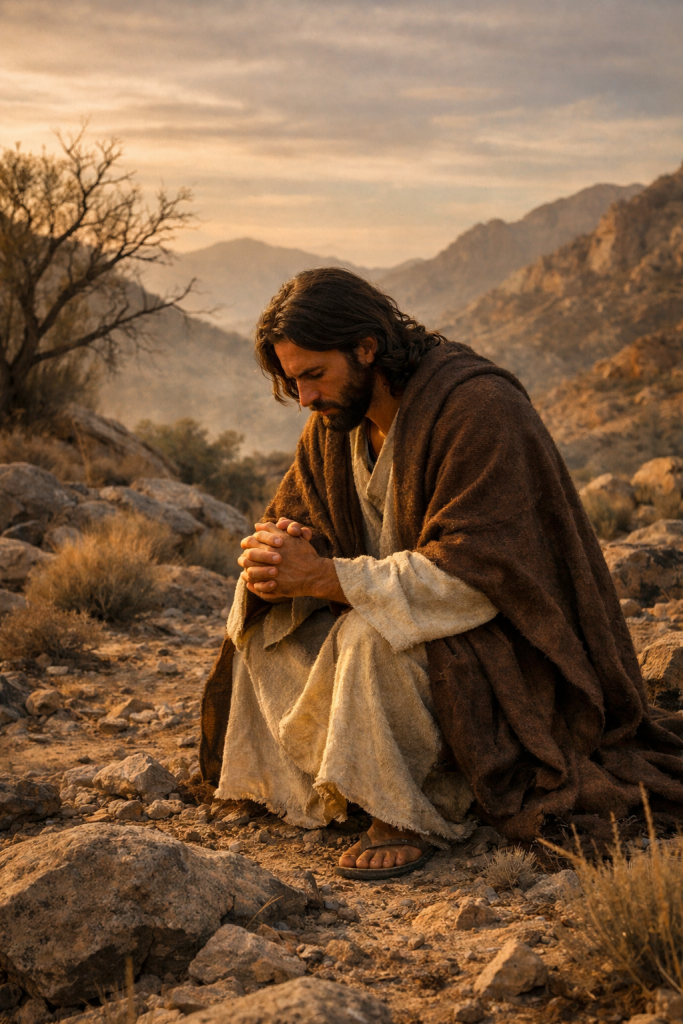
    • Jesus: In Gethsemane, facing the cross, Jesus prayed, “Not my will, but Yours be done” (Luke 22:42). His surrender brought salvation to the world.

    These stories remind us that trust is not abstract—it is lived out in real human struggles.


    8. Encouragement for Today

    If you are walking through hardship, remember:

    • You are not alone. God is with you.
    • Your pain has purpose. God is working through it.
    • Your faith matters. Trusting God is your greatest testimony.

    Isaiah 43:2 promises: “When you pass through the waters, I will be with you; and when you pass through the rivers, they will not sweep over you.”

    Hardship may feel like drowning, but God promises you will not be overcome.


    Conclusion

    Trusting God when life is hard is not easy, but it is transformative. It shifts our focus from fear to faith, from despair to hope, from self-reliance to divine dependence. Faith is forged in fire, and hope shines brightest in darkness.

    As you walk through trials, cling to the Shepherd who leads you, the Savior who redeems you, and the Spirit who comforts you. Remember the words of Psalm 46:1: “God is our refuge and strength, an ever-present help in trouble.”

    Your hardship is not the end—it is the beginning of a deeper trust in God, who will never fail you.

    Closing Prayer

    Heavenly Father,
    In the midst of trials and uncertainty, we choose to trust You. We surrender our fears, our doubts, and our burdens into Your hands. Remind us of Your promises when our hearts grow weary, and strengthen us with Your peace that surpasses all understanding. Lord, help us to walk by faith and not by sight, knowing that You are with us in every storm. May our lives reflect Your glory even in hardship, and may our hope remain anchored in Christ.

    In Jesus’ name, Amen.

    In what area of your life right now do you need to surrender control and choose to trust God more fully?

    1.            Recall a past hardship – Write about a time when God carried you through difficulty. How did your trust in Him grow during that season?

    2.            Identify current struggles – What challenges are you facing right now? How can you invite God into those areas more intentionally?

    3.            Anchor in Scripture – Choose one Bible verse from the article (e.g., Proverbs 3:5-6 or Isaiah 41:10). Reflect on what it means for your life today and write how you can apply it.

    4.            Surrender exercise – List the things you are trying to control. Next to each one, write a prayer of surrender, giving it over to God.

    5.            Gratitude in hardship – Write down three blessings you can thank God for, even in the midst of your struggles. How does gratitude shift your perspective?

    Leave a Reply

    Your email address will not be published. Required fields are marked *

  • Why GOD Allows Waiting

    Meta Description:

    Discover the biblical reasons why God allows waiting in our lives. Learn how seasons of waiting strengthen faith, build patience, and prepare us for God’s perfect timing with powerful Bible verses and spiritual insights.

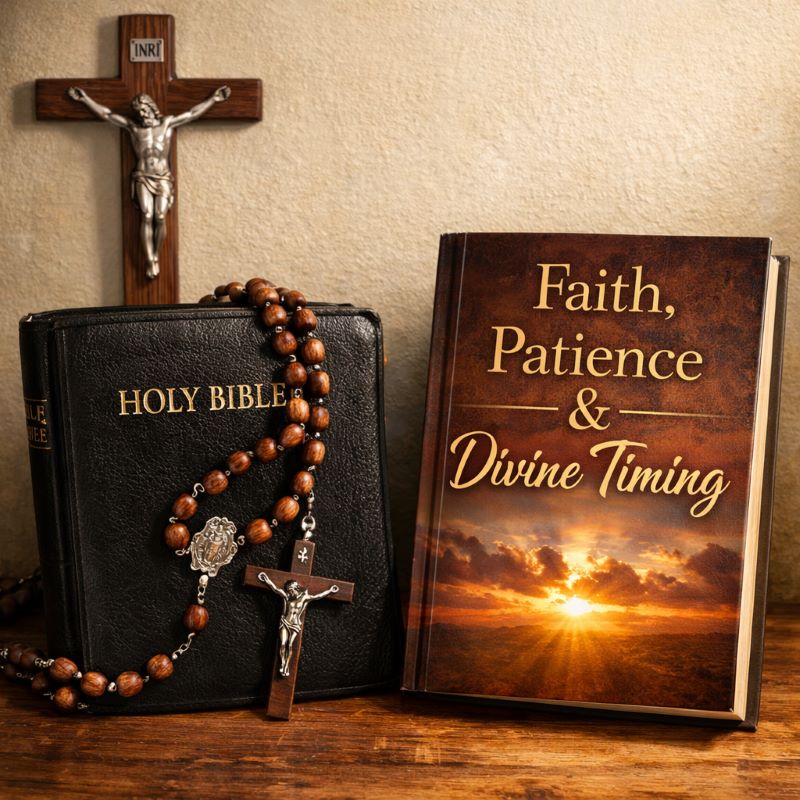
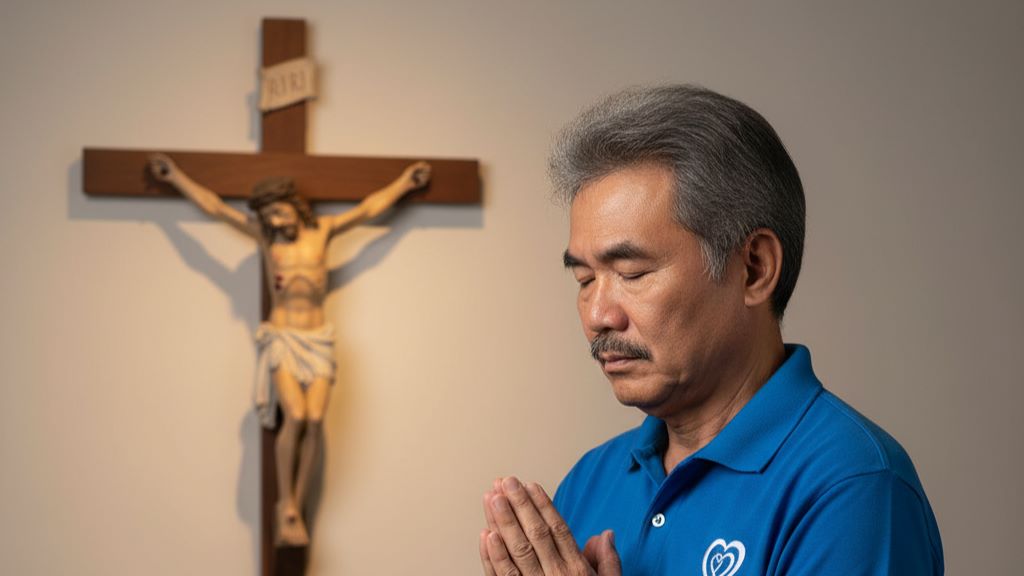
    crucifix-holy bible-holy rosary-faith-patience-divine timing

    A Biblical Reflection on Faith, Patience, and Divine Timing.

    Waiting is one of the most difficult experiences in life. We live in a world that values speed, instant answers, and immediate results. When we pray, we often hope that God will respond right away. But many times, the answer does not come quickly. Instead, we find ourselves in a season of waiting.

    During these moments, we may ask questions like:
    “Why is God silent?”
    “Why is my prayer not answered yet?”
    “Why does God allow me to wait?”

    The truth is that waiting is not a punishment. In many cases, waiting is part of God’s loving plan to shape our faith, strengthen our character, and prepare us for greater blessings. The Bible shows us that waiting is often the place where God does His deepest work in our hearts.

    Let us explore several spiritual reasons why God allows waiting in our lives.

    abraham waiting for isaac

    1. God Uses Waiting to Strengthen Our Faith

    One of the main reasons God allows waiting is to strengthen our faith. Faith grows strongest when we must trust God without seeing immediate results.

    The Bible reminds us:

    “I wait for the Lord, my whole being waits, and in his word I put my hope.”
    — Psalm 130:5

    Waiting teaches us to rely on God’s promises rather than our circumstances. When everything happens quickly, we may depend on our own understanding. But when we wait, we learn to trust that God is working behind the scenes even when we cannot see it.

    Think about Abraham. God promised him a son, but Abraham and Sarah waited many years before Isaac was born. During that time, Abraham had to believe that God would keep His promise despite his old age.

    When God allows waiting, He is often strengthening our faith so that when the blessing comes, we will recognize that it came from Him alone.

    2. Waiting Teaches Us Patience and Spiritual Maturity

    Patience is one of the most valuable spiritual qualities a believer can develop. However, patience cannot grow without waiting.

    The Bible says:

    “But if we hope for what we do not yet have, we wait for it patiently.”
    — Romans 8:25

    God is not only concerned about what we receive; He also cares about who we become. Waiting develops patience, humility, and endurance. These qualities shape our character and help us grow spiritually.

    Consider the story of Joseph. He received a dream from God as a young man, but before that dream came true, Joseph experienced betrayal, slavery, and prison. Many years passed before he became a leader in Egypt.

    If Joseph had received his position immediately, he may not have been ready for the responsibility. God used the waiting years to prepare him.

    In the same way, God may be preparing us through seasons of waiting.


    joseph the governor of egypt

    3. God Uses Waiting to Prepare the Right Time

    God’s timing is perfect, even when it feels slow to us. Sometimes the blessing we desire cannot happen yet because the timing is not right.

    The Bible reminds us:

    “He has made everything beautiful in its time.”
    — Ecclesiastes 3:11

    God sees the whole picture of our lives. He knows the right moment for every opportunity, relationship, and breakthrough. What feels like a delay to us may actually be divine timing.

    Imagine planting a seed. Even if we water it every day, it cannot grow overnight. It needs time to develop roots beneath the soil before the plant appears above the ground.

    God often works the same way in our lives. While we are waiting, He may be arranging circumstances, opening doors, or preparing people who will play a role in our future.

    When the right time arrives, the blessing will come exactly when it should.


    toddler planting a seed

    4. Waiting Draws Us Closer to God

    Seasons of waiting often lead us to deeper prayer and dependence on God. When we cannot control the outcome, we are more likely to seek Him with sincerity and humility.

    The prophet Isaiah wrote:

    “But those who wait on the Lord shall renew their strength; they shall mount up with wings like eagles.”
    — Isaiah 40:31

    Waiting can become a powerful spiritual experience if we use that time to draw closer to God. Instead of seeing waiting as wasted time, we can see it as an invitation to deepen our relationship with Him.

    Many people discover that their strongest faith developed during their hardest waiting seasons. In those moments, God becomes their source of peace, comfort, and strength.

    Waiting reminds us that God Himself is the greatest blessing, even more than the answers we seek.

    Jesus with child

    5. God Uses Waiting to Protect Us


    Sometimes God allows waiting because He is protecting us from something we cannot see.

    There may be situations where receiving what we want too soon could harm us or lead us in the wrong direction. Because God loves us, He may delay certain things until the conditions are safe and beneficial.

    The Bible assures us:

    “For I know the plans I have for you,” declares the Lord, “plans to prosper you and not to harm you.”
    — Jeremiah 29:11

    God’s plans are always motivated by love and wisdom. When we experience a delay, it does not mean God has forgotten us. Instead, He may be shielding us from difficulties that we cannot yet understand.

    Later in life, many believers look back and realize that God’s delays were actually acts of protection.


    6. Waiting Helps Us Appreciate the Blessing

    When something takes time to arrive, we often value it more deeply. Waiting builds anticipation and gratitude.

    The Bible encourages believers:

    “Be still before the Lord and wait patiently for him.”
    — Psalm 37:7

    If everything happened instantly, we might overlook the importance of God’s gifts. But when we wait, we learn to appreciate the blessing when it finally arrives.

    Think of a long-awaited prayer finally being answered. The joy and gratitude we feel are often greater because we remember the season of waiting.

    God understands that waiting can deepen our appreciation for His goodness.


    man by the lake

    7. Waiting Reminds Us That God Is in Control

    Perhaps the most important lesson waiting to teach us is that God—not us—is in control.

    Human beings naturally want to control outcomes and timelines. But waiting humbles us and reminds us that God’s wisdom is far greater than our own.

    The Bible says:

    “Trust in the Lord with all your heart and lean not on your own understanding.”
    — Proverbs 3:5

    When we surrender our timing to God, we acknowledge His authority over our lives. This surrender brings peace because we know that our future rests in His capable hands.

    Trusting God during waiting seasons is a powerful act of faith.


    How to Wait with Faith

    Waiting does not mean doing nothing. The Bible encourages believers to wait actively by trusting, praying, and continuing to live faithfully.

    Here are a few ways to wait with faith:

    1. Continue praying.
    Prayer keeps our hearts connected to God during uncertain seasons.

    2. Trust God’s promises.
    Reading and meditating on Scripture reminds us that God is faithful.

    3. Serve and grow where you are.
    Even while waiting, we can continue doing good and helping others.

    4. Be patient with God’s timing.
    Remember that God’s delays are never without purpose.


    Final Encouragement

    If you are currently in a season of waiting, take heart. Waiting does not mean God has forgotten you. In fact, it may mean that He is working in ways you cannot yet see.

    God uses waiting to strengthen faith, develop patience, prepare blessings, and draw us closer to Him. Every moment of waiting is part of a greater story that God is writing in your life.

    Remember this powerful promise from Scripture:

    “Wait for the Lord; be strong and take heart and wait for the Lord.”
    — Psalm 27:14

    Your waiting is not wasted. Behind the scenes, God is preparing something beautiful for the right moment.

    Trust His timing. Keep believing. And hold on to hope.

    Because when God’s time comes, His plans will unfold in ways far greater than we could have imagined.

    “Let us practice humility in our everyday life to please our Creator.”

    captbitz

    Leave a Reply

    Your email address will not be published. Required fields are marked *

  • Why Does God Test Our Faith? – A Biblical Reflection

    Meta Description:
    Discover why God tests our faith and how trials strengthen our trust, deepen our relationship with Him, and prepare us for a greater purpose according to biblical teachings. 🙏

    Person in desperate hold of the steering wheel to steady the ship during a storm.

    Faith is one of the most important foundations of the Christian life. It is the bridge between what we see and what we believe. Yet anyone who has walked with God long enough knows that faith is often tested. There are moments when prayers seem unanswered, when trials come unexpectedly, and when life becomes heavier than we imagined. In those moments, many believers quietly ask the same question: Why does God test our faith?

    Understanding the purpose behind these tests can transform how we view our struggles. Instead of seeing them as punishments, we begin to recognize them as part of God’s loving work in our lives.

    Faith Must Be Proven

    One reason God tests our faith is to prove that it is real. In everyday life, valuable things are tested before they are trusted. Gold is refined in fire to remove impurities. A bridge is tested before people are allowed to cross it. In the same way, faith is tested to show its authenticity.

    The Bible reminds us that faith grows stronger through trials. When everything in life is comfortable and easy, it is not difficult to say we trust God. But when challenges appear—financial struggles, health issues, disappointments, or uncertainty—our faith is revealed for what it truly is.

    These tests are not meant to destroy us. Instead, they reveal the strength of the faith God has placed in our hearts.

    Abraham about to slaughter his son Isaac.

    Faith Grows Through Trials

    Another reason God tests our faith is to help it grow. Just as muscles grow stronger when they are exercised, faith grows stronger when it is stretched.

    Think about the story of Abraham. God asked him to sacrifice his son, Isaac, the very child through whom God had promised to bless many nations. This request must have been confusing and painful. Yet Abraham trusted God completely. In that moment, Abraham’s faith was tested—but it was also strengthened and honored by God.

    Trials often place us in situations where trusting God becomes our only option. When we come through those moments, we realize something powerful: our faith is stronger than it was before.

    Tests Teach Us Dependence on God

    Sometimes God allows our faith to be tested so we can learn true dependence on Him.

    Human nature often pushes us toward self-reliance. When things go well, we may unknowingly begin to depend more on our own abilities than on God. Trials interrupt that illusion of control. They remind us that our strength, wisdom, and security ultimately come from Him.

    In difficult seasons, prayer becomes deeper. Our relationship with God becomes more sincere. We seek Him not only for blessings but for guidance, comfort, and strength.

    In this way, trials bring us closer to God rather than pushing us away.

    Tests Prepare Us for Greater Purpose

    God may also test our faith as He prepares us for something greater.

    Many of the people God used most powerfully in the Bible went through seasons of testing. Joseph was betrayed by his brothers and imprisoned before becoming a leader in Egypt. Moses spent years in the wilderness before leading the Israelites out of slavery. David faced many hardships before becoming king.

    These seasons of testing were not wasted time. They were training grounds where God shaped their character, humility, patience, and trust.

    Likewise, the trials we face today may be preparing us for responsibilities, opportunities, or ministries that we cannot yet see.

    Tests Reveal What Is in Our Hearts

    Another purpose of testing is that it reveals what is truly inside our hearts.

    When life is comfortable, it is easy to believe that our faith is strong. But difficult circumstances often reveal hidden fears, doubts, or areas where we still need to grow.

    This revelation is not meant to shame us. Instead, it invites us to bring those weaknesses before God. When we recognize our need for Him, transformation begins.

    God already knows our hearts. The test is often for our benefit—so that we can see ourselves honestly and grow spiritually.

    God Never Tests Us Without a Purpose

    One important truth to remember is that God never tests our faith without a purpose. His tests are not random, cruel, or meaningless.

    Even when we do not understand what He is doing, we can trust His character. God is loving, patient, and wise. The same God who allows the test is also the one who provides the strength to endure it.

    Just as a loving teacher gives tests to help students grow and learn, God allows trials to help our faith mature.

    Lighting a candle dedicated to a soul.

    How Should We Respond to Tests of Faith?

    Knowing that tests have a purpose helps us respond differently when they come.

    First, we should hold on to trust. Even when we cannot see the outcome, we can trust that God is working behind the scenes.

    Second, we should remain patient. Growth rarely happens instantly. Faith is developed over time through consistent trust in God.

    Third, we should seek God more deeply. Trials can become powerful opportunities to strengthen our prayer life and deepen our relationship with Him.

    Finally, we should remember God’s past faithfulness. Looking back at how God has helped us before can give us courage to face present challenges.

    The Reward of Tested Faith

    Faith that has been tested becomes something precious. It becomes steady, resilient, and deeply rooted in trust.

    People with tested faith are not those who have never faced struggles. They are the ones who continued to trust God despite those struggles.

    Over time, tested faith produces peace, wisdom, patience, and spiritual maturity. It also becomes a testimony that can encourage others who are going through their own trials.

    Final Thoughts

    When we ask, “Why does God test our faith?” the answer is not always simple. But Scripture and experience both reveal that these tests serve a purpose. They refine our character, strengthen our trust, draw us closer to God, and prepare us for greater things.

    If you are currently walking through a difficult season, remember this: a test of faith is not a sign that God has abandoned you. It may actually be a sign that He is shaping you for something greater.

    The fire that tests gold does not destroy it—it makes it purer and more valuable. In the same way, the trials that test our faith can ultimately deepen, strengthen, and make our relationship with God more unshakable.

    And when the test is over, we often discover something beautiful: our faith in God has grown stronger than we ever imagined. 🙏

    “Faith trusts that God is working; patience waits for His perfect timing.”

    Unknown

    Leave a Reply

    Your email address will not be published. Required fields are marked *

  • Why Mountains Symbolize God’s Power on Earth – A Biblical Reflection

    Meta Description:

    Discover the biblical meaning of mountains as symbols of God’s power on earth. Learn how Scripture reveals His majesty, strength, and divine presence.

    There is something about mountains that silences the soul.

    Stand before one, and suddenly your problems feel smaller. Your worries seem lighter. Your heart becomes aware of something greater than itself. From the beginning of Scripture, mountains have stood not merely as geological formations, but as powerful symbols of God’s presence, authority, and glory on earth.

    Mountains rise. And in their rising, they preach.

    1. Mountains Reveal God’s Majesty

    In the Bible, mountains often serve as meeting places between heaven and earth. One of the most powerful moments occurred in the Book of Exodus when God descended upon Mount Sinai. The mountain trembled. Smoke filled the air. Thunder roared. It was not a casual event—it was a revelation of divine power.

    God could have chosen a valley. He could have spoken from a quiet field. But He chose a mountain.

    Why?

    Because mountains reflect elevation, authority, and transcendence. They remind us that God is high above all creation. His ways are higher than ours. His thoughts are beyond our limited understanding. When we look at a mountain peak, we are reminded that God is not small, not distant, and certainly not weak.

    He reigns.

    2. Mountains Represent God’s Unshakable Strength

    Mountains do not move easily. Storms may strike them. Winds may howl. Rain may pour for days. Yet they stand.

    Throughout Scripture, mountains symbolize stability and strength. In the Book of Psalms, the psalmist declares that those who trust in the Lord are like Mount Zion—unshakable and enduring forever.

    This is not poetic exaggeration. It is a spiritual truth.

    When life feels unstable—when finances shake, relationships crack, or dreams collapse—God remains like a mountain. Firm. Faithful. Immovable.

    The mountain reminds us: God is not nervous about your situation. He is not scrambling to fix what surprised you. He is steady. And when we root ourselves in Him, we become steady, too.

    3. Mountains Are Places of Encounter

    Again and again in Scripture, people meet God on mountains.

    In the Book of 1 Kings, the prophet Elijah climbed Mount Horeb discouraged and exhausted. He expected God in the wind, the earthquake, and the fire—but God revealed Himself in a gentle whisper. The mountain became a place of renewal.

    In the Gospel of Matthew, Jesus often went up a mountain to pray. It was on a mountain that He delivered the Sermon on the Mount. It was on a mountain that He was transfigured before His disciples, revealing divine glory.

    Mountains are symbolic spaces where heaven touches earth.

    This teaches us something powerful: when we rise above the noise of the world—when we separate ourselves to seek God—we encounter Him more deeply. The “mountain” may not be physical for you. It may be an early morning prayer. A quiet room. A moment of surrender.

    But the principle remains: elevation brings revelation.

    4. Mountains Remind Us That Growth Requires Climbing

    Mountains are beautiful—but they are not easy.

    You don’t drift to the summit. You climb.

    Spiritually, this is important. Growth in faith requires effort. Discipline. Endurance. There are steep paths, rocky terrain, and moments when you want to turn back. But every step upward strengthens you.

    The mountain teaches perseverance.

    In our generation, we often want instant results—instant success, instant breakthroughs, instant answers. But mountains are formed over time. Their grandeur is the result of pressure, shifting, and endurance.

    Could it be that God allows certain “mountain climbs” in your life to shape your character?

    The climb builds faith. The struggle builds dependence. The height builds perspective.

    And when you reach the top—even briefly—you see farther than you ever could from the valley.

    5. Mountains Proclaim God’s Creative Power

    Look at a mountain range. The vastness. The detail. The strength. No human hand could design such a magnitude.

    Creation itself declares the power of God.

    The sheer size of mountains humbles human pride. Skyscrapers seem small. Kingdoms fade. Empires rise and fall—but mountains remain.

    They silently testify that God is eternal.

    If He can carve peaks from rock, if He can shape the earth with such precision, then surely He can shape your life. If He can hold continents in place, He can hold your future in His hands.

    The mountain is not just scenery—it is a sermon.

    6. Mountains and the Promise of Movement

    Here’s the beautiful paradox: mountains represent strength, but Jesus also said that faith can move mountains.

    In the Gospel of Matthew, Jesus taught that if we have faith even as small as a mustard seed, we can say to a mountain, “Move,” and it will move.

    What does this mean?

    It means that no obstacle—no matter how massive—can resist the power of God working through faith. The very symbol of immovability becomes movable in the presence of divine authority.

    That should ignite hope in your heart.

    The mountain that stands before you today—fear, debt, sickness, disappointment—is not greater than the God who created mountains.

    Final Reflection: When You See a Mountain

    The next time you see a mountain, whether in person or in a photograph, let it preach to you.

    Let it remind you that:

    • God is higher than your problems.
    • God is stronger than your fears.
    • God is steady when life feels unstable.
    • God invites you to climb closer.
    • God can move what seems immovable.

    Mountains symbolize God’s power on earth because they are visible declarations of His majesty, strength, and presence. They rise from the ground yet point toward heaven. They are rooted deeply yet reach upward boldly.

    And perhaps that is what our lives are meant to do as well.

    To stand firm.
    To grow upward.
    To reflect His glory.

    So when you face a mountain, do not be intimidated.

    Remember who made it.

    Leave a Reply

    Your email address will not be published. Required fields are marked *

  • What Does the Bible Say About Consistency?

    Meta Description:
    Discover what the Bible says about consistency and why faithfulness in small, daily actions matters to God. This inspiring and motivational article explores biblical truths, powerful Scriptures, and practical steps to help you stay spiritually steady, grow in perseverance, and reflect God’s unchanging character in everyday life.

    We live in a world that celebrates big beginnings. New goals. New habits. New promises. But if we’re honest, it’s not the starting line that defines us — it’s the steady steps that follow.

    Consistency is not loud. It doesn’t trend. It doesn’t usually go viral. But in the Bible, consistency is powerful. It is holy. It is transformative.

    So what does Scripture really say about being consistent?


    1. Consistency Reflects God’s Character

    Before we even talk about our own habits, we need to look at God Himself. The Bible describes Him as faithful, unchanging, and steadfast.

    “Jesus Christ is the same yesterday and today and forever.” — Hebrews 13:8

    God’s love does not fluctuate with our performance. His mercy does not expire. His promises do not shift with culture. From Genesis to Revelation, He remains steady.

    When we choose consistency — in prayer, in kindness, in obedience — we mirror the character of a faithful God. We reflect His reliability in a world full of instability.

    Consistency is not just discipline. It is discipleship.


    2. Faithfulness in Small Things Matters

    We often think consistency only counts when it produces big results. But the Bible says otherwise.

    In Luke 16:10, Jesus says:

    “Whoever is faithful in very little is also faithful in much.”

    This means God is watching not just the milestones — but the mundane moments.

    • The quiet prayer when no one sees.
    • The daily effort to be patient with your family.
    • The decision to choose integrity at work.
    • The commitment to open your Bible even when you feel nothing.

    Consistency in the small things prepares us for greater responsibilities. The world measures success by speed. God measures it by faithfulness.

    Think about the farmer. He does not harvest the day after planting. He waters, waits, tends, and trusts. Day after day. Season after season.

    Consistency is how seeds become fruit.


    3. Do Not Grow Weary

    Let’s be real — consistency is hard. Motivation fades. Feelings fluctuate. Life gets busy. Discouragement creeps in.

    That’s why Galatians 6:9 encourages us:

    “Let us not grow weary in doing good, for in due season we will reap, if we do not give up.”

    Notice that phrase: if we do not give up.

    The breakthrough often comes after the boring middle. The answer often comes after repeated prayer. The growth often happens quietly before it becomes visible.

    You may not see progress today. But heaven sees your persistence.

    God honors those who keep showing up.


    4. Consistency Builds Spiritual Strength

    Spiritual maturity does not happen overnight. Even the heroes of faith developed through daily obedience.

    Consider the Book of Daniel. Daniel prayed three times a day — consistently, even when it became illegal. Even when it threatened his life, his consistency in private gave him courage in public.

    Or think of Apostle Paul. He endured shipwrecks, prison, persecution — yet he kept preaching, writing, encouraging, and serving. His letters continue to strengthen believers today because he refused to quit.

    Spiritual muscles grow through repeated practice:

    • Repeated forgiveness.
    • Repeated worship.
    • Repeated trust.
    • Repeated surrender.

    Consistency turns belief into a lifestyle.


    5. Consistency Is Rooted in Love, Not Legalism

    Here’s something important: biblical consistency is not about rigid perfection. It’s about relational devotion.

    Jesus did not call us to mechanical rule-following. He called us to abide in Him.

    In John 15:4, He says:

    “Abide in Me, and I in you.”

    To abide means to remain. To stay. To continue.

    Consistency flows from connection. When we love God, we keep coming back to Him — even after failure. Even after weakness. Even after we fall short.

    Consistency is not about never stumbling. It’s about always returning.


    6. Your Consistency Impacts Others

    You may think your daily faithfulness goes unnoticed. But someone is watching.

    Your children see your prayers.
    Your friends notice your integrity.
    Your coworkers feel your steadiness.
    Your community is shaped by your example.

    Think of King David. Though imperfect, he consistently sought God’s heart. His psalms still comfort millions today.

    Consistency leaves a legacy.

    It builds trust. It strengthens relationships. It creates spiritual stability in uncertain times.


    7. Practical Ways to Live Consistently

    If you want to grow in biblical consistency, start small:

    1. Set a daily appointment with God. Even 10–15 minutes matters.
    2. Choose one area to improve. Maybe patience. Maybe gratitude. Maybe discipline.
    3. Create rhythms, not resolutions. Focus on habits over hype.
    4. Expect resistance. The enemy attacks momentum.
    5. Give yourself grace. When you miss a day, don’t quit — restart.

    Remember, consistency is built one decision at a time.


    Final Encouragement

    Consistency may not feel dramatic. It may not feel glamorous. But in the Kingdom of God, it is deeply powerful.

    The Bible does not celebrate people who started well and disappeared. It honors those who endured. Those who remained. Those who kept the faith.

    Maybe today you feel tired. Maybe you’re tempted to give up on a prayer, a dream, a discipline.

    Don’t.

    Keep sowing.
    Keep praying.
    Keep loving.
    Keep trusting.

    Because in due season, you will reap.

    And one day, when you stand before God, the greatest words you could hear are not, “You were impressive.”

    But, “Well done, good and faithful servant.”

    Stay faithful. Stay steady. Stay consistent.

    God is.

    “Consistency without patience is nothing.”

    Abito Espejo

    Leave a Reply

    Your email address will not be published. Required fields are marked *

  • REFLECTION: 7th Day of Lent

    Meta Description:

    Reflect on the 7th Day of Lent with this inspiring and spiritual article that encourages perseverance, prayer, and personal growth through faith, self-examination, and trust in God’s transforming grace.

    Seven days into Lent. One full week of choosing intention over impulse, prayer over noise, surrender over control.

    The 7th day may not feel dramatic. There are no palm branches yet, no empty tomb, no triumphant alleluias. Just the quiet work of the soul. And maybe—if we’re honest—a little fatigue.

    Lent has a way of revealing things. It reveals our habits. It reveals our attachments. It reveals how easily distracted we are. For seven days, you may have tried to pray more consistently, fast from something that grips your heart too tightly, or give more generously. And already, you might feel the resistance rising.

    That’s normal.

    The 7th day of Lent is not about perfection. It is about perseverance.

    In Scripture, the number seven often symbolizes completion and spiritual fullness. In the Bible, God rested on the seventh day—not because He was tired, but because the work was complete. The seventh day invites us to pause and examine: What has God already begun in me this Lent?

    Maybe you’ve noticed impatience surfacing more quickly. Maybe you’ve become more aware of how much you rely on comfort. Maybe you’ve realized how hard it is to sit in silence without reaching for your phone. These realizations are not failures. They are awakenings.

    Lent is not a performance. It is a return.

    For seven days, you have been turning your heart—however imperfectly—toward God. That turning matters. Even if you stumbled. Even if you forgot one day. Even if your fast has been inconsistent.

    The beauty of Lent is that it mirrors the journey of Jesus Christ in the wilderness. Before His public ministry, before miracles and crowds, He spent forty days in solitude, fasting and facing temptation. The wilderness was not punishment; it was preparation.

    Your wilderness is preparing you too.

    On this 7th day, reflect on what has been stirred within you. Have you felt discomfort? Good. Growth rarely feels comfortable. Have you felt convicted? That means your heart is still sensitive to God’s voice. Have you felt weak? Then you are in the perfect position to rely on His strength.

    Lent strips away illusions. It reminds us that we are dust, yes—but dust deeply loved by God.

    Sometimes we begin Lent with big goals: “I will pray an hour a day.” “I will completely eliminate this habit.” “I will transform my life in forty days.” Then reality humbles us. The 7th day teaches us something powerful: transformation is not instant. It is daily. Quiet. Steady.

    One day at a time.

    Seven days ago, you made a decision. You chose to lean in instead of drift away. That decision is still active today. And it matters more than you think.

    Maybe this week has revealed that you need more patience. Maybe it has shown you that you’ve been carrying bitterness. Maybe it has uncovered fear about the future. Whatever has surfaced, bring it honestly before God. Lent is not about hiding your weaknesses—it is about offering them.

    The 7th day is a checkpoint, not a conclusion.

    Ask yourself:

    • What has God been whispering to me this week?
    • What distractions am I being invited to release?
    • Where have I resisted change?
    • Where have I experienced unexpected peace?

    Reflection is powerful because it transforms experience into wisdom.

    And here’s something deeply encouraging: God is more committed to your growth than you are. Even when your discipline wavers, His grace does not. Even when your motivation fades, His mercy remains steady.

    If you’ve been faithful this week—keep going.
    If you’ve stumbled—begin again.
    If you feel dry—stay anyway.
    If you feel strong—stay humble.

    Seven days in, you may not look different on the outside. But inside, seeds are being planted. Roots are going deeper. Awareness is increasing. And awareness is the first step toward holiness.

    Lent is not about becoming impressive. It is about becoming honest.

    The 7th day invites you to slow down and notice: God is already at work. In your prayers. In your struggles. In your quiet tears. In your small victories.

    Maybe the most powerful prayer you can pray today is simple:
    “Lord, continue the work You’ve started in me.”

    There are still many days ahead in this Lenten journey. There will be days of clarity and days of confusion. Days when you feel spiritually strong, and days when you feel distracted and distant. But remember this—growth is rarely loud. It happens in hidden places.

    Just like seeds beneath the soil.

    Seven days ago, you planted something. Today, trust that God is watering it. Stay faithful in the small things. Stay consistent in prayer. Stay gentle with yourself.

    The cross is still ahead. But so is the resurrection.

    And the quiet faithfulness of this 7th day is preparing your heart for both.

    Keep walking. Keep trusting. Keep reflecting.

    God is not finished with you yet.

    ” Our real blessings often appear to us in the shape of pains, losses and disappointments; but let us have patience and we soon shall see them in their proper figures.”

    Joseph Addison

    Leave a Reply

    Your email address will not be published. Required fields are marked *

  • How to Build a Christ-Centered Morning Routine

    Meta Description:

    Learn how to build a Christ-centered morning routine that is simple, sustainable, and rooted in Scripture. Start each day with peace and purpose.

    Quick Steps to Build a Christ-Centered Morning Routine

    1. Begin with stillness before checking your phone
    2. Read a short passage of Scripture
    3. Pray honestly about your day
    4. Set one spiritual intention
    5. Keep your routine simple and repeatable

    Mornings shape more than our schedules. They shape our hearts.

    “Christ-centered morning routine with Bible and journal”

    Before the notifications begin, before responsibilities press in, before the noise of the world grows loud, there is a quiet opportunity — a moment to anchor ourselves in something steady and eternal.

    Building a Christ-centered morning routine is not about adding pressure to wake up at 4:00 a.m. or creating a perfect spiritual checklist. It is about beginning the day aligned with God rather than being rushed by the world.

    Here is how to build a morning rhythm that is simple, sustainable, and centered on Christ.


    1. Begin with Stillness Before Stimulation

    Many of us reach for our phones before we even sit up in bed—emails, headlines, messages — all demanding attention immediately.

    But Scripture invites us into something different.

    “Be still, and know that I am God.” — Psalm 46:10

    Before you check your phone, pause.

    Take one or two minutes to breathe deeply. Whisper a short prayer:
    “Lord, thank You for this day. Help me walk with You in it.”

    This small act shifts your posture from reaction to reverence.

    A Christ-centered morning begins with stillness.


    2. Open Scripture Before Opening Your Schedule

    “Christ-centered morning routine with Bible and journal”

    Your calendar may tell you what you need to do. Scripture reminds you who you are.

    Even 10–15 minutes in the Word can reshape your perspective for the entire day.

    You might:

    • Read one Psalm
    • Follow a short devotional plan
    • Study a small passage deeply
    • Reflect on a single verse

    “Your word is a lamp to my feet and a light to my path.” — Psalm 119:105

    You don’t need to read chapters at a time. Consistency matters more than volume. A few faithful verses each morning will nourish your spirit more than an occasional long session.


    3. Pray Honestly and Specifically

    Prayer does not need to sound polished.

    A Christ-centered routine includes conversation — not performance.

    Bring God:

    • Your worries about the day
    • Your decisions
    • Your relationships
    • Your goals
    • Your weaknesses

    “Cast all your anxiety on Him because He cares for you.” — 1 Peter 5:7

    When you surrender your concerns in the morning, you carry less weight throughout the day.


    4. Set One Spiritual Intention

    Instead of a long list of resolutions, choose one focus for the day.

    It could be:

    • Patience
    • Gratitude
    • Humility
    • Faithfulness
    • Kindness

    Ask God to help you practice that quality intentionally.

    “Whatever you do, work at it with all your heart, as working for the Lord.” — Colossians 3:23

    A single intention keeps your heart aligned even when the day becomes busy.


    5. Create a Simple, Repeatable Structure

    The key to building a Christ-centered morning routine is sustainability.

    Keep it realistic.

    For example:

    • 2 minutes of stillness
    • 10 minutes of Scripture
    • 5 minutes of prayer
    • 1 written gratitude

    That is less than 20 minutes — but deeply grounding.

    It is better to practice a short, faithful routine daily than to attempt something overwhelming that fades after a week.


    6. Prepare the Night Before

    Morning success often begins in the evening.

    You might:

    • Place your Bible where you’ll see it
    • Write your verse ahead of time
    • Set your alarm with intention
    • Decide your wake-up time clearly

    Small preparation removes friction and increases consistency.

    “Commit to the Lord whatever you do, and He will establish your plans.” — Proverbs 16:3


    7. Give Yourself Grace as You Grow

    Some mornings will feel peaceful. Others will feel rushed.

    Some days your heart will feel focused. Other days, it may wander.

    That is normal.

    A Christ-centered morning routine is not about perfection. It is about direction.

    God is not measuring your performance. He is inviting your presence.

    “Because of the Lord’s great love, we are not consumed, for His compassions never fail. They are new every morning; great is Your faithfulness.” — Lamentations 3:22–23

    New mercies. Every morning.

    Even if yesterday was inconsistent, today is an invitation again.


    What a Christ-Centered Morning Produces Over Time

    When practiced consistently, this rhythm begins to:

    • Calm anxiety
    • Strengthen spiritual discipline
    • Increase gratitude
    • Improve emotional stability
    • Deepen trust in God
    • Shape your reactions throughout the day

    You may not notice a dramatic change in a week. But over months, the quiet transformation becomes clear.

    Your mornings become less hurried.
    Your decisions become less reactive.
    Your heart becomes steadier.


    A Gentle Reminder

    You do not need a complicated system to walk closely with Christ.

    You need consistency.
    You need sincerity.
    You need small daily faithfulness.

    Start tomorrow with something simple.

    Open your hands.
    Open your Bible.
    Open your heart.

    And let your morning begin not with pressure, but with presence.

    Christ is already there waiting.

    Helpful Tools for a Christ-Centered Morning

    If you’re building your morning rhythm, these tools can help:

    • A simple study Bible for deeper understanding
    • A guided devotional for structured reading
    • A prayer journal to write daily reflections
    • A habit tracker to build consistency

    Leave a Reply

    Your email address will not be published. Required fields are marked *